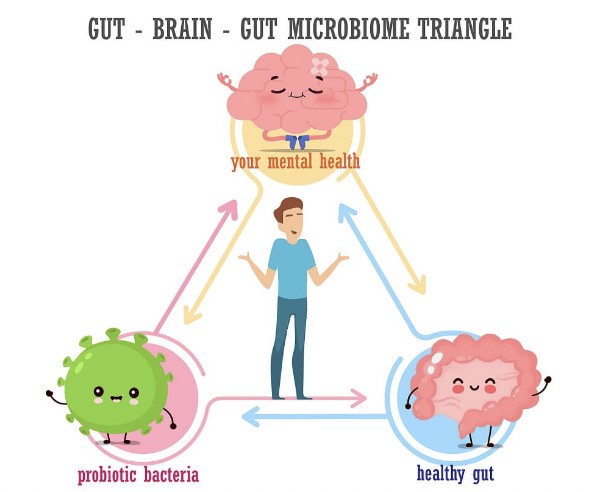
We are now learning our mood and mental health affects our microbiome (the community of microorganisms — bacteria, viruses, fungi, etc. — that live in and on our bodies). This means that just eating the right foods and taking the right supplements will NOT equal a healthy flora!
How Mood and the Microbiome Are Interconnected
- Bidirectional Communication — the gut and the brain speak through the gut-brain axis. Signals from the brain, stress, or emotions can affect the gut, and vice versa.
- Stress and Mood — stress, anxiety, and depression can alter the balance of gut bacteria. Chronic stress has been shown to have poor outcomes for gut health.
- Inflammation — negative emotions and chronic stress can trigger inflammation in the body, which alters the microbial composition.
- Neurotransmitter Production — gut microbes are involved in the production of certain neurotransmitters, such as serotonin and dopamine, which play key roles in regulating mood and emotions.
- Microbial Metabolites — gut bacteria produce metabolites, such as short-chain fatty acids (SCFAs) like butyrate. These metabolites can have anti-inflammatory effects and influence neural pathways related to mood regulation.
- Immune System Interaction — changes in the microbiome composition due to mood-related factors can influence immune responses, potentially affecting inflammation and overall health.
- Food and Microbiome — your gut flora will change in as little as 4 days depending on what you are eating! The easiest thing to increase is fiber (lots of fruit and veggies). This gives food for the good bacteria and much needed micronutrients, which in turn has positive effects on mood.
What Can You Do?
In my practice I spend a lot of time addressing emotional health: teaching you how to pull out unwanted emotions, regulate your stress response, and learn the language of your body. If you can regulate your emotions in the body, you can directly affect your microbiome, genetic expression, and your overall health!
Frequently Asked Questions
Can stress and mood really change my gut bacteria?
Yes. Stress, anxiety, and depression can alter the balance of gut bacteria, partly through the gut-brain axis, a bidirectional communication system, and partly through inflammation triggered by chronic stress.
Is diet alone enough for a healthy gut microbiome?
No, eating the right foods and taking the right supplements alone will not equal a healthy microbiome. Mood and mental health also play a significant role, since gut microbes are involved in producing neurotransmitters like serotonin and dopamine.
How quickly can diet change my gut flora?
Gut flora can begin to change in as little as 4 days depending on what you eat. Increasing fiber from fruits and vegetables is one of the easiest ways to feed good bacteria and support mood.